
What Is a Grinder Pump and How Does It Work? A Kingsland Homeowner's Guide
A grinder pump collects wastewater from your home, grinds solid waste into smaller particles, and pumps the wastewater through a pressurized line toward a sewer system. Grinder pumps are commonly used where gravity alone cannot move wastewater effectively because of elevation, distance, or local sewer-system design.
For Kingsland, TX homeowners, understanding this equipment is especially useful because local sewer infrastructure includes properties served by grinder units. Knowing what your pump does, what should never enter it, and which warning signs require attention can help you respond quickly when something goes wrong.
Young & Son - Septic & Irrigation provides grinder pump and general plumbing services in Kingsland and surrounding communities, helping homeowners understand their systems and make informed repair and maintenance decisions.
What Exactly Is a Grinder Pump?
A grinder pump is part of a property's wastewater system.
In a conventional gravity sewer setup, wastewater travels downhill through pipes until it reaches a municipal sewer main. Gravity does most of the work.
That arrangement is not practical for every property.
When a home sits at an elevation or location where wastewater cannot reliably reach the sewer main by gravity, a grinder pump can provide the pressure needed to move it.
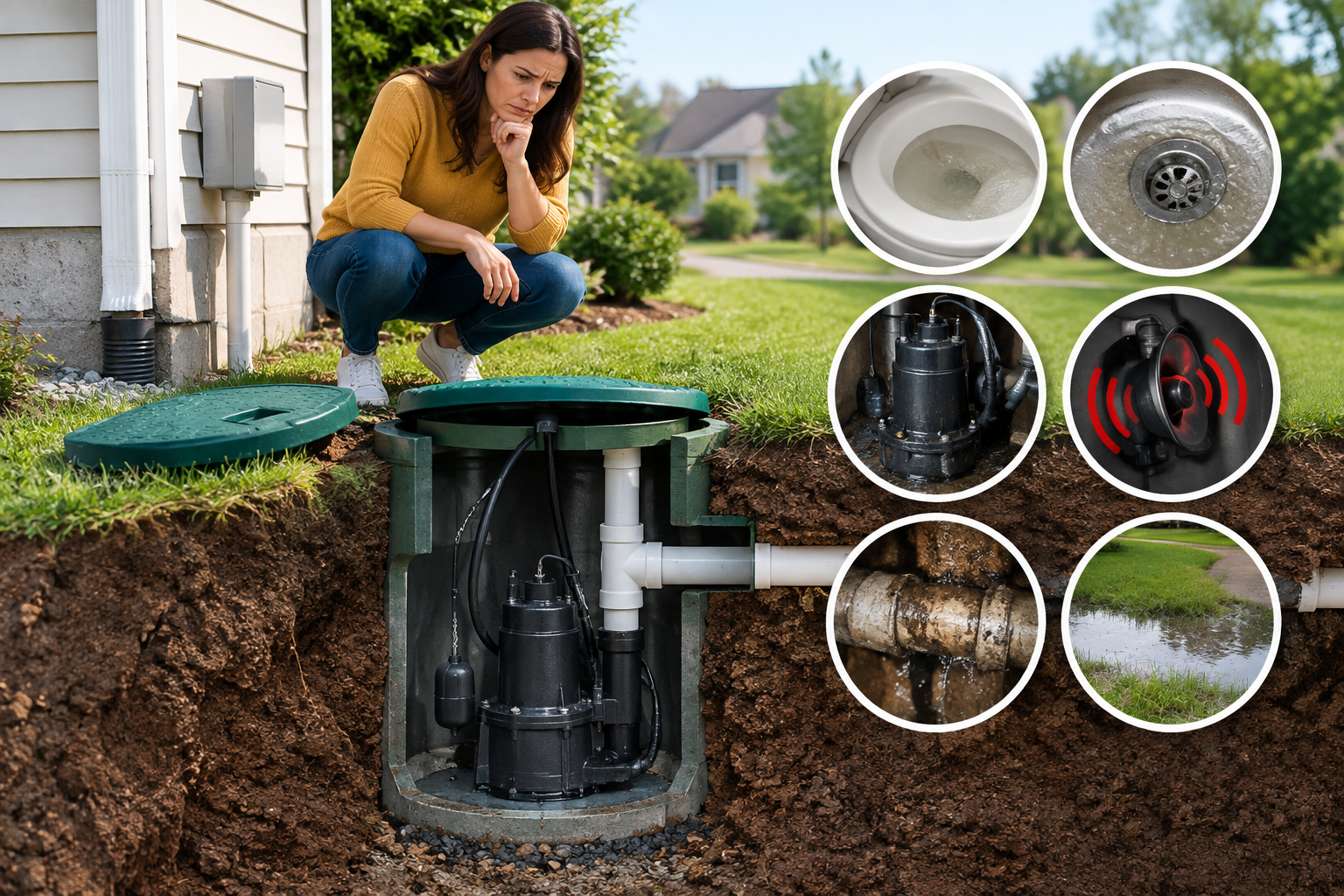
A typical system includes a basin or tank that receives wastewater from the house. Inside or associated with that basin is pumping equipment designed to process normal household sewage and move it into a pressurized sewer line.
The system operates automatically during normal use.
Most homeowners do not need to switch the grinder pump on whenever they flush a toilet or run the washing machine. Controls monitor the wastewater level and activate the pump when necessary.
How Does a Grinder Pump Work?
Although equipment varies, the basic process can be understood in four stages.
Step 1: Wastewater Leaves Your Home
When you:
- Flush a toilet
- Take a shower
- Run a sink
- Use the washing machine
- Operate the dishwasher
wastewater moves through your home's plumbing system toward the grinder pump basin.
Step 2: Wastewater Collects in the Basin
The basin temporarily holds wastewater.
As the level rises, controls monitor how much wastewater has accumulated.
The pump does not necessarily run continuously. It is designed to activate when the wastewater reaches an operating level established by the system.
Step 3: The Grinder Pump Activates
Once activated, the grinder mechanism processes solids found in normal household sewage into smaller particles.
The pump then creates the pressure needed to move the wastewater out of the basin.
This is why the equipment is called a grinder pump rather than simply a sewage holding tank.
Step 4: Wastewater Is Pumped Toward the Sewer System
The processed wastewater travels through a discharge line toward the sewer infrastructure.
When the wastewater level in the basin falls sufficiently, the controls shut the pump off until another pumping cycle is required.
The process then repeats as the household uses water.
Why Do Some Kingsland Homes Need Grinder Pumps?
The need for a grinder pump generally comes down to how wastewater must travel from the property to the sewer system.
Gravity sewer lines work best when wastewater can naturally flow downhill. If elevation or sewer configuration makes that difficult, a pressurized system may be necessary.
Grinder pumps can therefore be used when:
- The property is lower than the sewer main.
- The sewer connection requires pressure.
- Local infrastructure uses a low-pressure sewer arrangement.
- Property layout prevents practical gravity drainage.
This is particularly relevant in Kingsland because the Kingsland Municipal Utility District publishes requirements concerning residential grinder units.
Local documentation explains responsibilities associated with grinder-unit installation and sewer service. Homeowners planning new connections or significant wastewater-system work should confirm current requirements directly with the district.
Is a Grinder Pump the Same as a Sewage Pump?
Not exactly.
The terms are sometimes used loosely, but grinder pumps and other sewage pumps can be designed for different operating conditions.
A grinder pump contains a mechanism intended to process solids before wastewater is pumped through the discharge system. Other sewage pumps may move wastewater without grinding material in the same way.
The correct equipment depends on the wastewater system's design.
Homeowners should avoid purchasing a replacement pump based only on appearance, horsepower, or price.
Pump selection can involve:
- Required pressure
- Flow requirements
- Basin configuration
- Discharge piping
- Electrical requirements
- Sewer-system specifications
- Local requirements
Installing equipment that is not suited to the system can create performance and reliability problems.
What Should Never Go Into a Grinder Pump?
The word "grinder" can create a misleading impression.
A grinder pump is not a trash disposal system.
It is designed to process normal household wastewater and sewage. Items that do not belong in the wastewater system can create blockages, interfere with equipment, or contribute to premature failures.
Avoid flushing:
- Baby wipes
- Cleaning wipes
- Paper towels
- Feminine hygiene products
- Diapers
- Cotton swabs
- Dental floss
- Rags
- Plastic
- Cat litter
- Household trash
Even products labeled "flushable" are better placed in the trash when a property depends on sensitive wastewater equipment.
Kitchen habits matter too.
Avoid sending large amounts of:
- Cooking grease
- Fats
- Oils
- Food waste
- Harsh materials
into the wastewater system.
A useful household rule is simple: toilets are primarily for human waste and toilet paper.
That habit can reduce avoidable plumbing and grinder pump problems.
How Do You Know If Your Grinder Pump Is Working?
During normal operation, most homeowners barely notice their grinder pump.
Wastewater leaves the house, the pump cycles when necessary, and plumbing fixtures continue operating normally.
Potential warning signs include:
- Grinder pump alarms
- Multiple slow drains
- Toilets that flush poorly
- Wastewater backups
- Persistent sewage odors
- Unusual pump noises
- Excessive cycling
- A pump that seems to run continuously
- Wastewater around the pump area
One isolated slow sink does not necessarily indicate grinder pump failure. A localized clog may be responsible.
When several fixtures develop problems simultaneously, particularly when accompanied by a pump alarm, a broader wastewater problem becomes more likely.
What Does a Grinder Pump Alarm Mean?
A grinder pump alarm is designed to alert homeowners that something is not operating normally.
Depending on the equipment, an alarm can be associated with an abnormally high wastewater level or another system condition requiring attention.
The alarm does not automatically identify the failed component.
If the alarm activates, reduce unnecessary water use until you understand what is happening.
Avoid high-volume activities such as:
- Laundry
- Long showers
- Dishwasher cycles
- Filling bathtubs
- Running several plumbing fixtures simultaneously
Continuing to send large amounts of wastewater into a system that may not be pumping correctly can increase the risk of an overflow or backup.
Do not simply silence a recurring alarm and ignore it.
Contact a qualified service provider so the system can be inspected.
What Happens During a Power Outage?
Grinder pumps generally depend on electricity.
During a power outage, homeowners should be conservative with water use because the pump may not be able to remove wastewater from the basin normally.
The basin has limited storage capacity.
How much wastewater can safely enter before a problem occurs depends on the specific system.
During an extended outage:
- Minimize toilet flushing when practical.
- Avoid running laundry.
- Avoid dishwasher use.
- Keep showers short or delay them.
- Do not fill and drain bathtubs unnecessarily.
- Monitor for alarms or wastewater problems after power returns.
Never attempt unsafe electrical work around wastewater equipment.
If the system does not resume normal operation after power has been restored, contact a professional.
Does a Grinder Pump Need Maintenance?
Grinder pumps are mechanical and electrical equipment, so they should not be assumed to last indefinitely without attention.
The exact maintenance requirements depend on the equipment manufacturer and system configuration.
Homeowners can help by monitoring system performance and following good wastewater habits.
Practical steps include:
Keep Inappropriate Materials Out
Preventing wipes, grease, rags, and household trash from entering the system is one of the simplest things homeowners can do.
Respond to Alarms
An alarm exists for a reason. Investigate recurring or unexplained alarms instead of repeatedly resetting them.
Pay Attention to Changes
New noises, odors, slow drains, or frequent pump cycling can indicate developing problems.
Keep the Pump Area Accessible
Do not make the system unnecessarily difficult for technicians to reach. Landscaping, stored materials, or permanent structures should not block required service access.
Follow Manufacturer Recommendations
If documentation for your grinder pump is available, keep it with your household maintenance records.
Manufacturer guidance can provide important model-specific information about operation and maintenance.
How Long Does a Grinder Pump Last?
There is no single lifespan that applies to every grinder pump.
Service life depends on several factors, including:
- Equipment quality
- Installation
- Household wastewater volume
- What enters the system
- Electrical conditions
- Maintenance
- Operating environment
- Frequency of cycling
Instead of relying only on equipment age, watch how the system performs.
A relatively old pump that continues operating reliably may not need immediate replacement simply because of its age. A newer pump experiencing repeated failures should be investigated even though it has not been installed for many years.
Condition and performance matter.
Can a Grinder Pump Be Repaired?
Many grinder pump problems can potentially involve serviceable components, but the appropriate solution depends on what has failed.
Professional troubleshooting may identify problems involving:
- Controls
- Floats
- Electrical components
- Pump components
- Discharge piping
- Connections
- The grinder mechanism
In some situations, repair may be practical.
In others, replacement may provide the more reliable solution, particularly if the pump itself is seriously deteriorated or has a history of repeated failures.
A professional should explain the diagnosis before recommending replacement.
That is where transparency matters.
Homeowners should understand what failed, why the recommended work is necessary, and what options are available before authorizing significant grinder pump work.
Can I Repair a Grinder Pump Myself?
Grinder pump repairs are generally not an ideal DIY project.
The system combines three areas where mistakes can create serious problems:
- Wastewater and sanitation
- Electricity
- Mechanical pumping equipment
Opening wastewater equipment can expose homeowners to contaminated material. Electrical work around wet environments introduces additional hazards.
There are also local requirements to consider.
Kingsland MUD documentation addressing new sewer service states that property owners are responsible for contracting with qualified plumbing and electrical professionals for applicable grinder-unit installation work, with district inspection involved before service.
For installation, replacement, or significant repair, professional service helps ensure that both the equipment and the surrounding wastewater system are evaluated correctly.
Grinder Pump vs. Septic System: What's the Difference?
A grinder pump and a septic system are not the same thing.
A grinder pump generally moves wastewater toward a sewer system. A septic system treats and disperses wastewater on the property through components such as a septic tank and drain field or an aerobic treatment system.
The distinction is important in a service area where homeowners may encounter both municipal sewer infrastructure and private septic systems.
Young & Son works with multiple aspects of residential wastewater and plumbing systems, including plumbing, septic, and grinder pump-related needs.
That broader experience can be useful when a homeowner does not know whether a problem originates with a fixture, drain line, pump, or another part of the wastewater system.
Why Work With a Local Kingsland Plumbing Provider?
Grinder pump problems are highly practical problems.
When toilets will not flush properly or a wastewater alarm activates, homeowners need clear answers rather than confusing technical language.
Young & Son - Septic & Irrigation is a family-owned business serving Kingsland and surrounding communities.
A professional evaluation should help answer questions such as:
- Is the grinder pump actually causing the problem?
- Does the pump need repair?
- Is replacement necessary?
- Could a plumbing blockage be responsible?
- Are there signs of a discharge problem?
- What should the homeowner do next?
- How can similar problems be reduced in the future?
For homeowners searching for grinder pump service near me in Kingsland, TX, choosing a local company that understands both plumbing and wastewater systems can simplify the process.
FAQs About Grinder Pumps in Kingsland, TX
Why would my house need a grinder pump?
A grinder pump may be necessary when wastewater cannot reach the sewer system reliably through gravity alone. The pump creates pressure to move wastewater from the property's collection basin through a discharge line toward the sewer infrastructure.
Does a grinder pump run every time I flush the toilet?
Not necessarily. Wastewater collects in a basin, and controls activate the pump when the wastewater reaches a designated level. The exact operation depends on the equipment and system design.
What happens if my grinder pump stops working?
Wastewater may begin accumulating in the basin instead of being pumped away. You may notice an alarm, multiple slow drains, backups, odors, or other plumbing problems. Reduce water use and arrange for professional evaluation.
Can I flush wipes if I have a grinder pump?
It is best to keep wipes out of the wastewater system, including products marketed as flushable. Wipes, paper towels, hygiene products, rags, and other materials can contribute to pump or wastewater-system problems.
Who services grinder pumps near me in Kingsland, TX?
Young & Son - Septic & Irrigation provides plumbing and wastewater-related services in Kingsland and surrounding areas. If your grinder pump alarm activates or you notice other signs of trouble, contact the team for an evaluation.
Need Grinder Pump Service in Kingsland? Contact Young & Son
A grinder pump performs an essential job that most homeowners rarely think about: moving wastewater away from the property when gravity alone cannot do the job.
Understanding how the system works makes it easier to recognize trouble.
If you notice an alarm, multiple slow drains, unusual pump sounds, sewage odors, excessive cycling, or a wastewater backup, do not wait for the problem to become more disruptive.
Young & Son - Septic & Irrigation provides local plumbing and wastewater service with an emphasis on trust, clear communication, and practical recommendations. As a family-owned provider serving Kingsland, TX and surrounding communities, Young & Son can evaluate the system and explain whether maintenance, repair, replacement, or another plumbing solution is appropriate.
Recent Posts
Ready to Work With a Certified Escort Professional?
If you're planning an oversize load move and need a state certified pilot car in Kennewick, WA or surrounding states, Brand X is ready to assist.
Certified. Insured. Professional.
Request a Quote
We will get back to you as soon as possible.
Please try again later.
